The Best Time to Visit Laugarás Lagoon, Month by Month

The best time to visit Laugarás Lagoon is September, when the air still averages around 11°C, the crowds from peak summer have thinned, and the nights are dark enough by closing time to catch the first aurora activity of the season. The runner-up window is late spring, for longer daylight without the summer queues. The month to avoid, if you can help it, is not really a month at all: the busiest hour is mid to late afternoon, whatever the season, when the Golden Circle day tours arrive together.
Quick answer
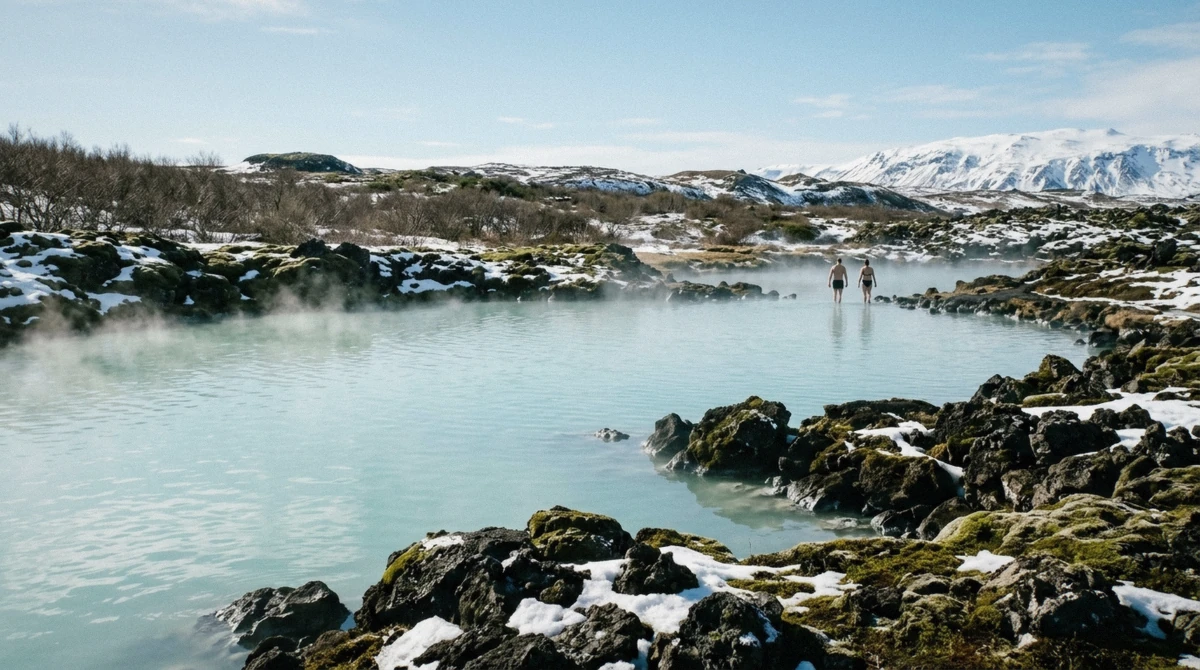
September gives you the best combination at Laugarás Lagoon: average highs around 11°C, thinner crowds than July or August, and dark enough evenings to watch for the northern lights from the water. June gives you the longest daylight of any month, and the deep winter months trade daylight for the emptiest lagoon of the year.
Key takeaways
- September averages 11°C by day and is the first month with dark-enough evenings for aurora activity.
- June runs about 21 hours of daylight around the solstice, more than any other month.
- Winter (December to February) averages only 3°C by day, but the lagoon stays open and the water never changes temperature.
- The water holds 38-40°C in every month of the year, so the season only changes the air you walk through, not the swim itself.
- The quietest slots each day are the first hour after opening and the last two hours before closing.
- Golden Circle day tours land mid to late afternoon, the single busiest window regardless of season.
Seasons at a Glance
Read the Verdict column first if you're short on time. Full pricing and opening hours and ticket tiers at Laugarás Lagoon are covered elsewhere; this table is about timing, not cost.
| Season | Average high | Daylight | Typical closing | Crowds | Verdict |
|---|---|---|---|---|---|
| Winter (Dec-Feb) | about 3°C | as little as 4 hours 7 minutes around 21 December | 21:00 daily | Low | Emptiest, aurora season, coldest air |
| Spring (Mar-May) | about 4-10°C | building toward 21 hours by late June | 21:00 daily | Low to Moderate | Good value, milder by May |
| Summer (Jun-Aug) | about 13-15°C | up to about 21 hours around 21 June | 22:00 Sun-Thu, 23:00 Fri-Sat | High | Longest days, busiest hours |
| Autumn (Sep-Nov) | about 4-11°C | shrinking back toward winter levels | 21:00 daily | Moderate | Best overall, aurora returns |
No two adjacent seasons here land on the same verdict, and for good reason: the trade-off between daylight, air temperature and crowd size moves in a different direction almost every quarter. Winter and summer sit at opposite ends of nearly every column at once, cold and dark against mild and bright, while spring and autumn each borrow a little from both without fully committing to either.
Month by Month
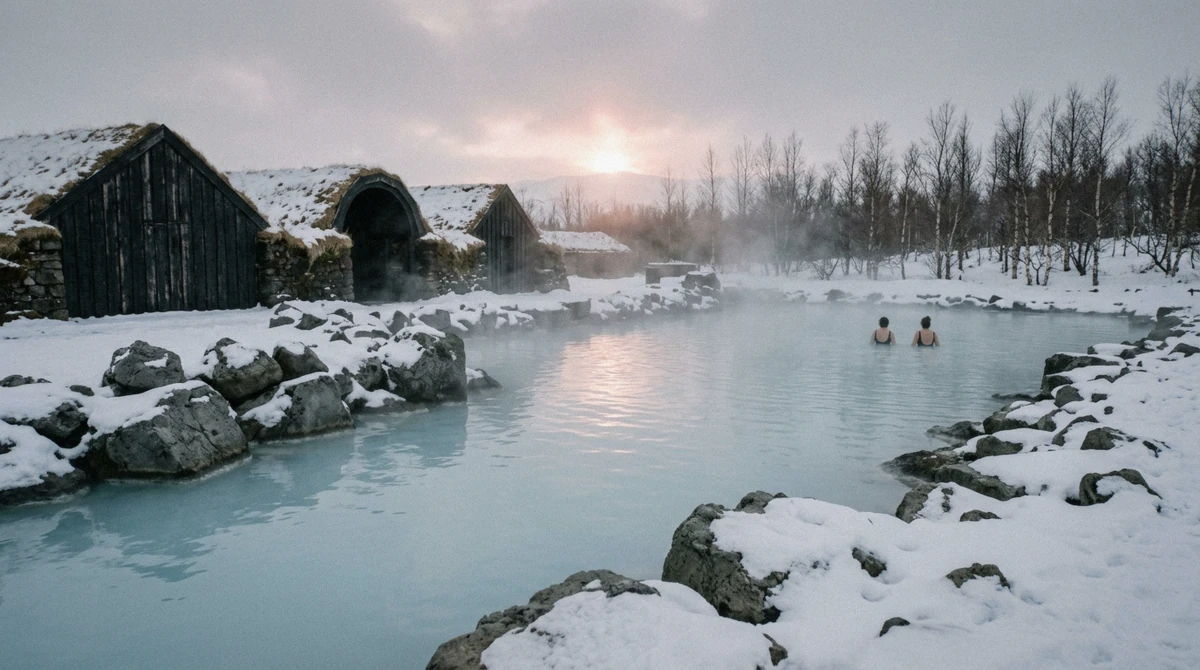
Average daily highs across the year, typical of the South Iceland lowlands the lagoon sits in.
| Month | Average high |
|---|---|
| January | 3°C |
| February | 3°C |
| March | 4°C |
| April | 7°C |
| May | 10°C |
| June | 13°C |
| July | 15°C |
| August | 14°C |
| September | 11°C |
| October | 7°C |
| November | 4°C |
| December | 3°C |
Winter, December to February: Northern Lights, Shortest Days
Average highs sit around 3°C, and daylight bottoms out at about 4 hours 7 minutes around 21 December. The upside: this is the quietest the lagoon gets all year, the water is still 38-40°C, and dark evenings inside the 10:00-21:00 daily hours make aurora-watching from the pool a real possibility on a clear night.
The honest trade-off is the walk itself. Getting from the changing room to the water in near-freezing air is the coldest few seconds of any visit here, and roads on the Golden Circle can turn icy with little warning, so a rental car with winter tires and a flexible plan matters more in these three months than in any other season. Book with enough lead time that a bad-weather day still leaves you a second date to try.
Spring, March to May: Milder Air, Building Light
Highs climb from about 4°C in March to 10°C in May, and daylight builds fast toward the summer extreme. Crowds stay lighter than summer while the Golden Circle roads are usually clear of winter ice by late spring.
Summer, June to August: Longest Days, Busiest Hours
Highs run 13 to 15°C, and daylight around the 21 June solstice stretches to about 21 hours. This is also peak season for every Golden Circle tour, so the lagoon runs at its busiest, with closing pushed to 22:00 Sunday to Thursday and 23:00 Friday and Saturday to match.
The extended hours are the one real compensation for the crowds. With the sun barely setting in June, a 21:00 or 22:00 arrival still feels like broad daylight, and the afternoon rush has usually cleared out by then, so a summer evening slot can thread the needle between long days and thinner crowds better than a summer afternoon ever will.
Autumn, September to November: Aurora Returns, Thinner Crowds
Highs fall from 11°C in September to 4°C in November. Aurora season begins roughly in September, and by then the lagoon's own hours run 10:00-21:00 daily, dark enough late in the evening to actually see something. Crowds thin out fast once the summer tour schedules wind down.
September specifically keeps one foot in each season: air still mild enough by day that the walk from the changing room isn't a shock, and dark enough by the 19:30 last-entry cutoff for a real shot at the lights on a clear night. That combination is the whole reason it tops the list above the other three seasons.
Best Time of Day
The lagoon runs 15 June to 15 August 10:00-22:00 Sunday to Thursday and 10:00-23:00 Friday and Saturday, and 16 August to 14 June 10:00-21:00 daily, with last entrance sold 90 minutes before closing (20:30 in high summer Sunday to Thursday, 21:30 Friday and Saturday, 19:30 the rest of the year). There is no time limit once you're in; the site simply closes 1.5 hours after the last slot sold, so a late arrival never means a rushed swim.
All four Golden Circle day tours that stop here arrive mid to late afternoon, which makes that window the busiest of the day regardless of season. The quietest slots are the first hour after 10:00, before the tour buses land, and the last two hours before closing, once day-trippers have moved on. Anyone arriving independently, on the three-day wellness tour or otherwise, can pick either end of the day and skip the afternoon crowd entirely.
The Mandarin-guided Golden Circle tour only allocates one hour at the lagoon on the Birki pass, arriving in that same afternoon window, so anyone on that itinerary specifically won't get a quiet visit either way.
A late arrival on the last slot of the day is worth considering on its own merits, not just as a way to dodge the crowd. Because there's no time limit once you're through the door, the last entry of the evening still buys a full, unhurried visit, and the site empties out steadily as the evening goes on rather than all at once at a fixed closing bell. The trade-off is the kitchen at Ylja, which closes earlier than the lagoon itself, so a late slot usually means eating before you swim rather than after.
Best Season by Traveler Type
If you want to see the northern lights from the water
come between September and April, when it's dark enough inside the lagoon's own opening hours.
If you're traveling with young kids
aim for the first hour after 10:00 in spring or autumn, when the air is milder than winter and the afternoon crowd hasn't arrived yet; remember the minimum age here is 8, and 8 to 15 year olds need an adult with them. Younger children and full age-by-lagoon details are covered in Iceland lagoons with kids.
If you want the longest possible daylight for photos
June gives you close to 21 hours of light around the solstice.
If you're building a first Iceland trip around the Golden Circle and want the safest, most forgiving weather
late spring to early autumn keeps roads clear and highs above 10°C.
If you want the emptiest lagoon and don't mind the cold
January or February, when highs sit around 3°C and the summer crowds are months away.
What the Weather Actually Changes
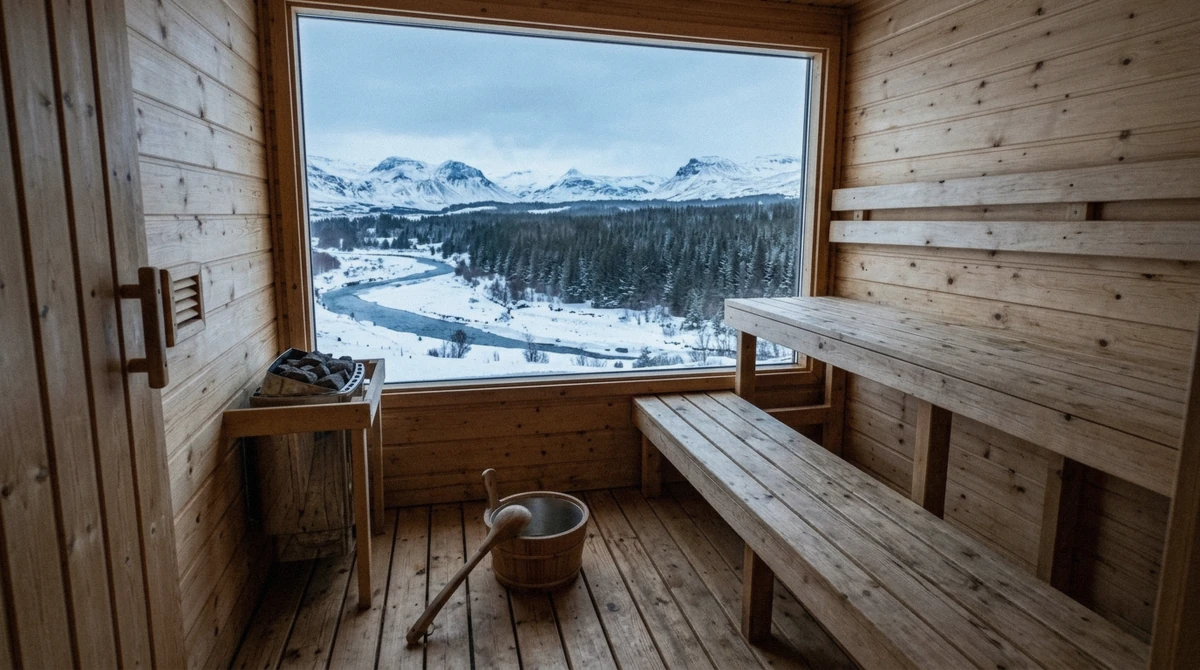
The water at Laugarás holds 38-40°C in every month, drawn from the Laugarás geothermal field and cooled with glacial water from the Hvítá, so the swim itself never changes with the season. What changes is everything around it: how far you have to walk from the changing rooms in the cold, how dark it gets before closing, and how many other people picked the same afternoon slot you did. A January visit and a July visit at the same lagoon can feel like two different trips, even though the water itself is identical both times.
The cold plunge sits at a constant 10-12°C year-round too, which in July feels bracing and in January feels like the whole point. Neither pool cares what month it is. The calendar only decides your commute to and from the water. If you're still weighing Laugarás against the other lagoons on the calendar rather than the season, our best lagoon in Iceland comparison covers that separately.
Crowds, Prices and the One Thing That Never Moves
The Price Does Not Rise in July
Two of Iceland's best-known lagoons move their price with demand. Blue Lagoon's Comfort admission starts at ISK 11,990 and climbs on peak dates and midday slots, and Sky Lagoon's Saman pass starts at ISK 12,990 and does the same. Laugarás sells by time slot from ISK 6,900 for Birki, and what changes between a February Tuesday and a July Saturday is availability rather than the number on the ticket. Prices checked July 2026, at 124 ISK to the dollar.
That matters for planning. In most of Iceland the cheap season is a discount you chase; here it is simply a quieter room for the same money. The saving you can actually engineer is the tier, not the date: bring a towel and Birki does everything Lerki does apart from the drink.
Where the Crowds Come From
Almost all of the pressure on a given afternoon comes from four Golden Circle day tours arriving inside the same two-hour window. Three of them park for two hours, so the busiest stretch is predictable rather than random, and it moves earlier in winter because the operators are chasing daylight.
School holidays matter less here than they do at the Blue Lagoon, because the minimum age of 8 keeps the youngest families out entirely. What we notice instead is the Friday and Saturday effect in high summer, when the doors stay open until 23:00 and Icelanders drive out from Reykjavík for the late evening.
When the Weather Turns
Nothing about this visit is weather dependent in the way a glacier hike or a boat trip is. The lagoon does not cancel for rain, and rain in the water is barely noticeable once you are in it. Wind is the honest exception: the walk between the upper and lower level is outdoors, and a January gale makes that thirty seconds unpleasant rather than dangerous.
The practical answer is to keep the booking and change the hour, not the day. If the forecast turns, move to a later slot, since the last two hours before closing are calmer in every sense.
Best Time to Visit Laugarás Lagoon: Questions
What is the best month to visit Laugarás Lagoon?
September, for a combination of mild air around 11°C, thinner crowds than midsummer, and dark-enough evenings within the 10:00-21:00 daily hours to watch for the aurora.
Is there a time limit once you're inside?
No time limit at all. The site closes 1.5 hours after the last entry slot sold, so once you're through the door your visit runs as long as you like within that window.
What time of day has the fewest people?
The first hour after 10:00 and the last two hours before closing. All four Golden Circle day tours arrive mid to late afternoon, which is the busiest stretch every single day of the year.
Can you see the northern lights from the water at Laugarás?
Yes, roughly September through April, which is when it gets dark enough while the lagoon is still open. Outside that window the lagoon's own hours run through daylight or twilight only.
Is Laugarás Lagoon open in winter?
Yes, 10:00-21:00 daily from 16 August through 14 June, which covers the entire winter. The water still runs 38-40°C regardless of the air temperature outside, and winter is when the lagoon runs at its quietest, aside from a handful of holiday weeks.
What is the worst time to visit for a lagoon day?
There isn't a bad month, since the water temperature never changes, but the worst hour on any given day is the mid to late afternoon, when every Golden Circle tour bus lands at once. If your schedule is flexible, treat the hour rather than the season as the thing to plan around.
Pick the month for the light and the crowd size you can live with, and pick the hour separately. Getting both right at Laugarás is mostly a matter of arriving before the buses or staying after they leave, whatever the calendar says. September does most of that work for you automatically, but a January morning or a June evening will get you the same quiet water if the season itself matters more to your trip than the crowd size does.